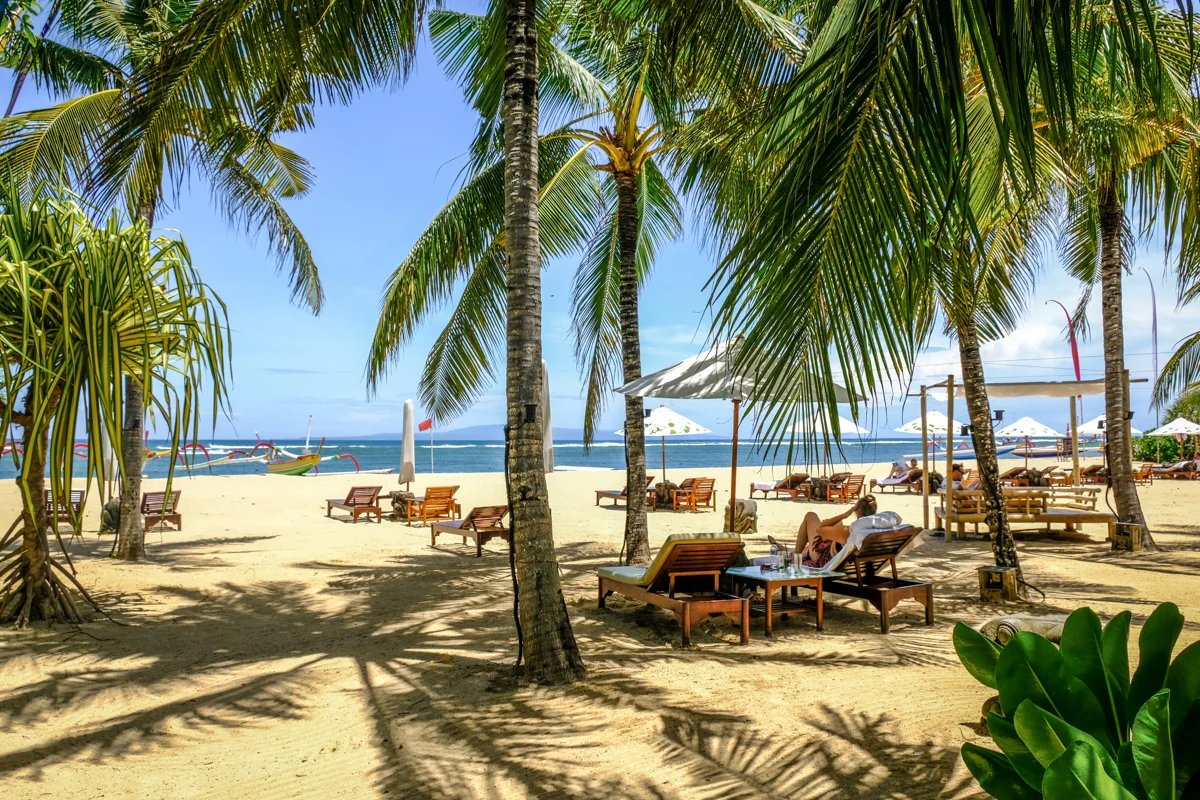
Bali's reputation as a beginner surf destination is half true. The west coast in dry season has some of the most forgiving waves on earth, and a fifteen-minute ride away there is reef that will hold you down and then introduce you to itself.
Knowing which is which is the entire skill.
Seasons in one line: dry season (April–October) means offshore winds on the west coast — Uluwatu, Canggu, Balangan. Wet season (November–March) flips it and the east coast works — Keramas, Sanur, Nusa Dua.
1. Batu Bolong, Canggu — your first wave
Level: Beginner · Bottom: Sand over soft reef · Best tide: Mid to high
A slow, crumbling longboard wave that breaks for a long time and forgives almost everything. This is where nearly everyone in Canggu caught their first green wave.
The cost is the crowd. At 8am on a clean day there are 150 people in the water and a third of them cannot control their board. Go at 6:30am or after 4pm.
Rental: 50,000–80,000 IDR/day for a soft-top. Lesson: 350,000–500,000 IDR for 90 minutes including board.
2. Balangan, Bukit — the first reef break
Level: Intermediate · Bottom: Reef · Best tide: Mid, rising
A long left down a reef shelf, mechanical and readable, at a beach that is still one of the nicest on the Bukit. On a mid-tide with a small swell it is the gentlest introduction to reef in Bali.
On a big swell it becomes a completely different, much less friendly wave. Check the forecast, not the photos.
3. Uluwatu — the one you build up to
Level: Advanced · Bottom: Sharp reef · Best tide: Mid to high
World-class, consistent, and genuinely dangerous. You enter through a cave, and getting out at low tide across dry reef is where most injuries happen — not in the wave itself.
If you have not surfed reef before, Uluwatu is not the place to learn. Watch a session from the warungs on the cliff first. You will learn more in an hour of watching than a session of guessing.
4. Keramas, east coast — the wet season answer
Level: Intermediate to advanced · Bottom: Black sand over reef · Best tide: Mid
A fast, punchy right that runs when the west coast is blown out, plus night surfing under floodlights — the only spot in Bali where that exists.
Dawn or dusk only; midday onshore wind ruins it. It is 75 minutes from Canggu, so treat it as a trip, not a session.
5. Padang Padang — the one you probably should not paddle out at
Level: Expert · Bottom: Shallow reef · Best tide: Mid to high, dry season
A perfect hollow left barrel, and one of the most localised line-ups on the island. On a solid swell it is a genuine world-class wave with maybe fifteen people who belong in it.
Impossibles, next door, is the honest alternative — the same swell, longer walls, a fraction of the pressure.
What a surf week costs
| Item | Cost |
|---|---|
| Board rental, 7 days | 400,000–600,000 IDR |
| Buying a used board | 2,500,000–5,000,000 IDR |
| Two lessons | ~800,000 IDR |
| Scooter with board rack, week | ~700,000 IDR |
| Reef cuts and antiseptic | inevitable |
If you are staying more than three weeks, buy a used board and sell it before you fly. The Facebook resale market here is fast and you will lose almost nothing.
Sleep near the break, not near the airport
Surf runs on dawn patrol. Every good session on this list happens between 6am and 8am, which means the difference between a great surf trip and an average one is whether you can be in the water fifteen minutes after waking up.
A place in Bingin or Padang is a five-minute walk from the sand. The same money in Kuta is a 50-minute pre-dawn drive, and by week two you stop going.
Bukit surf accommodation is also the most seasonal inventory in Bali — which means it goes unsold constantly outside peak weeks, and owners drop the price rather than run empty.
Last Call Bali lists exactly those rooms: Bingin surf lodges under $35 a night, Uluwatu villas at half their listed rate, Canggu rooms a two-minute walk from Batu Bolong for less than a taxi to the airport.
Find a bed near the break → — code DAWNPATROL takes 10% off stays of four nights or more.
Walk to the water. That is the whole trick.