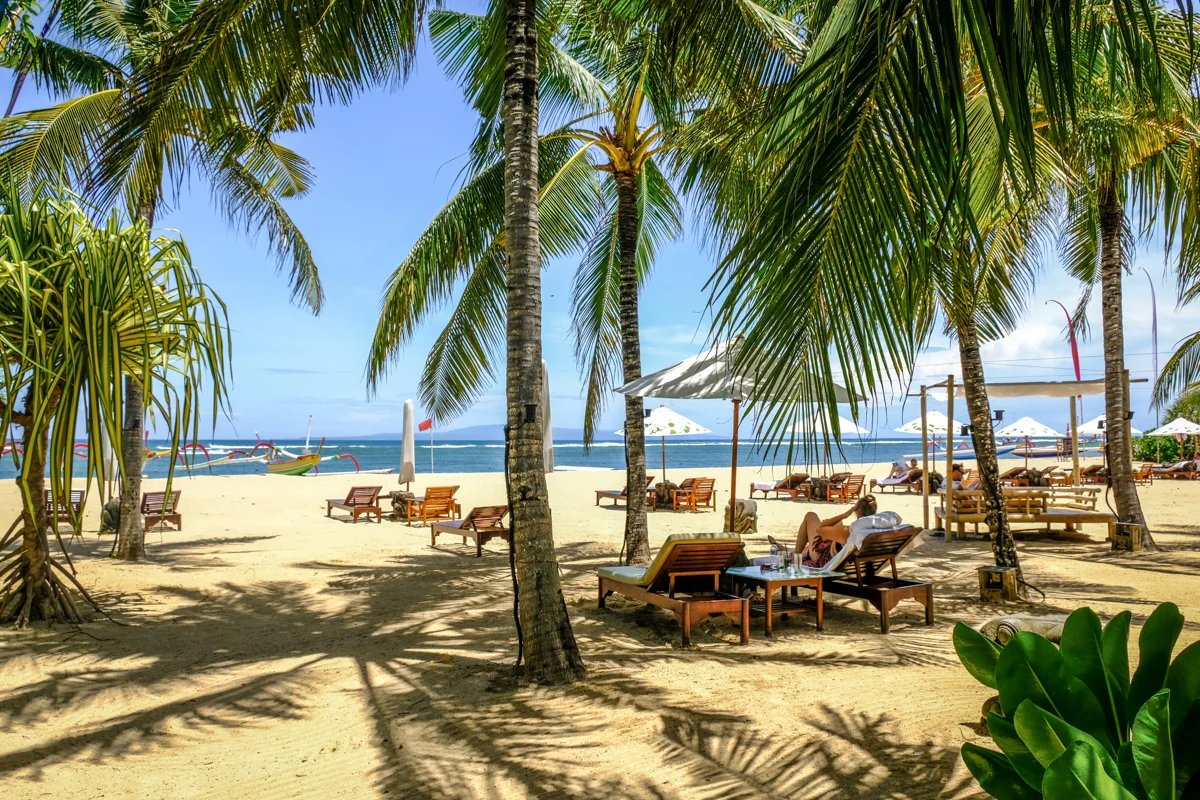
Bali has a reputation as a beginner surf destination. That reputation is exactly half true, and the half people get wrong is the half that puts them in an emergency clinic in Kuta getting reef pulled out of a knee.
The honest version: Bali has some of the best beginner waves on earth and some of the heaviest reef waves on earth, and they are sometimes five minutes apart on the same road. Old Man's in Canggu is a soft, slow, sand-bottom wave that a nervous 45-year-old can stand up on in one lesson. Echo Beach, a five-minute scooter north, is a reef break that will hold you down and then introduce you to the reef.
Nothing on the sign at the rental shop tells you which is which. So here it is.
Prices are 2026. Lesson rates rise in July–August and around Christmas.
The four beaches to actually learn at
Batu Bolong, Canggu. The default answer. Semi-beach break, sand and soft reef underneath, slow rolling waves, and a small industry of instructors standing in the whitewater. The crowd is enormous and mostly made of other beginners — which sounds bad and is actually the safety feature.
Old Man's, Canggu. Next door to Batu Bolong. Slower and longer, the longboard wave. Best at dawn before the wind and the crowd.
Kuta and Legian Beach. Genuinely underrated for learning. Long sandy beach break, no reef at all, cheap board rental, lifeguards on duty, and lessons for less than Canggu charges. Kuta is unfashionable, which is precisely why it is cheaper.
Sanur reefs. East coast, so it works in the wet season when the west is blown out. Soft, long, forgiving waves on a mid-to-low tide, and far fewer people. Best option from November to March.
Also fine: Dreamland on the Bukit (sandy bottom), the protected inside section of Padang Padang known as "Baby Padang", and Balangan whitewater on a high tide — all with an instructor who knows that day's tide.
The breaks to stay away from for your first year
Say these names out loud and then do not go there:
- Uluwatu — six reef peaks, cave entry and exit, strong current.
- Padang Padang Racetrack — called the Bali Pipe for a reason.
- Bingin — mechanical barrel over shallow reef, tiny takeoff zone, the inside goes dry.
- Impossibles — named for the sections you cannot make.
- Keramas — high-performance right, holds size.
- Echo Beach — reef, punchy, deceptively close to the beginner zone.
- Canggu's Berawa on a big day — fine when small, not when it is head-high.
The most common Bali beginner mistake is geographical: people book a villa in Uluwatu because it is beautiful, then discover there is no beginner wave within 20 minutes of it.
Get the right board, which means the biggest one
You want a soft-top foam board, 8'0" to 9'6". Bigger is better. It floats more, so you catch waves earlier; it is stable, so standing up is possible; and when it hits you — it will — it is foam.
Do not rent a shortboard in week one because it looks better. You will spend the session underwater and learn nothing. The progression is: foamie → longboard or 7'6" soft → mid-length → whatever you like.
| Item | 2026 price |
|---|---|
| Group lesson, 2h, board + rashie included | 350,000–500,000 IDR |
| Private lesson, 90 min | 500,000–800,000 IDR |
| 5-lesson package | 1,500,000–2,200,000 IDR |
| Foam board, per hour | 50,000–75,000 IDR |
| Foam board, full day | 150,000–200,000 IDR |
| Shortboard / mid-length, per day | 100,000–150,000 IDR |
| Board storage, per month | 250,000–400,000 IDR |
| Ding repair | 150,000–400,000 IDR |
Where the money leaks: almost every surf school sells a multi-lesson package at 25–40% below the per-lesson rate, and almost none of them advertise it. Ask. Same with board rental — a weekly rate is usually about four daily rates.
Spend 20 minutes on the sand before you touch the water
This is the single habit that separates people who progress from people who have a scary week.
Sit down and watch. You are looking for:
- Where the waves break, consistently. That is the peak.
- Where the other surfers paddle out. There is almost always a channel — a deeper strip where waves are not breaking. Use it.
- How big the sets are. Waves come in groups. The two you watched are not the biggest ones. Wait for a full set.
- What level everyone else is. If every person out there is on a shortboard doing turns, this is not your spot today.
- Which way the water is moving. Pick a fixed point on the beach. If you drift off it fast while standing waist-deep, there is a current.
If the waves look too big, they are. That is not caution, it is accurate reading.
Rip currents: the thing that actually scares people
A rip is a channel of water flowing back out to sea. Bali has them everywhere, and they are the number one cause of beginner panic. They are also not monsters once you understand them.
How to spot one: a strip of water that looks calmer, darker and deeper than the water either side of it, often with foam or sand being dragged seaward, and no waves breaking in it.
What to do if you are in one:
- Do not paddle or swim straight for the beach. You will lose and you will exhaust yourself doing it.
- Go parallel to the shore until the pull stops, then come in through the breaking waves.
- Stay with your board. It is your flotation device. Never ditch it to swim.
- If you are overwhelmed: sit on the board, get your breathing back, and raise one arm. Lifeguards on Kuta, Legian and Canggu watch for that.
Here is the counter-intuitive part: experienced surfers use rips deliberately, as a free ride out past the whitewater. That is a skill for later, and it is the reason a calm-looking patch of water is not a safe place to paddle in week one.
Where you are safest as a beginner: in the whitewater, in the impact zone, where the broken waves are pushing you toward the beach.
Tides, in the least amount of information you need
Every Bali surf spot has a tide it works on, and a tide where it is either flat or dangerous.
- Beach breaks (Canggu, Kuta, Legian): mid tide is the safe generalisation. Very low tide exposes the reef sections at Batu Bolong.
- Reef breaks: low tide means shallow reef. This is how people get hurt.
- Bukit beaches: at low tide several of them are exposed reef flats, not swimming water.
Download any tide app before your first session and check it the way you would check the weather. Then ask your instructor what tide the spot wants — they know, and they will tell you.
Falling correctly
Nobody teaches this and it prevents most injuries.
- Fall flat, not deep. Land like a starfish — spread out, shallow. Do not dive head-first into water you cannot see the bottom of.
- Fall away from your board, and cover the back of your head with your arms as you come up.
- Come up slowly with a hand above your head. Your board is attached to your ankle by a leash and it is somewhere overhead.
Over reef, this matters more: flat and shallow, every time.
Carrying and controlling the board
A 9-foot foam board is a large object with momentum. It is the most common way beginners hurt other people.
- Walk through whitewater with two hands on the rails, board at your side — never in front of you. A wave hitting a board held in front pushes it into your face.
- Keep the board perpendicular to the wave, nose pointing out, not lying flat across the wave face.
- Turtle roll for bigger whitewater: flip the board upside down, get underneath, hold both rails tight. Do not ditch it.
- Before you ditch or dive, look behind you. Every time.
- Check the leash for knots. A knot cuts the cord's strength by roughly half.
Surf etiquette, which is a safety system not a politeness code
Bali's lineups are crowded and some of them, especially the Bukit on a good swell, are territorial. Locals get priority, and they have earned it. These rules prevent collisions:
- The surfer closest to the breaking peak has right of way. That is the whole rulebook in one line.
- Do not drop in. If someone is already riding a wave, it is not your wave. This is the cardinal sin and the number one cause of collisions.
- Do not snake. Do not paddle around someone who has been waiting to get inside them.
- Paddle wide. Going back out, use the channel. Do not paddle through the zone where people are riding.
- Look before you go. Glance toward the peak before committing.
- Call your direction. A shouted "Left!" or "Right!" is genuinely useful.
- Apologise when you mess up. Eye contact, a wave, and "Maaf!" goes an extremely long way here.
One cultural note that matters beyond the water: do not hand things to people or touch them with your left hand. In Indonesia that hand has a different job.
Sun, heat and the two-hour rule
Bali is 8 degrees off the equator and the water is 27–29°C, so nobody wears a wetsuit and everybody underestimates the sun.
- Long-sleeve rash guard, not sunscreen alone. Sunscreen washes off in twenty minutes of paddling.
- Thick coloured zinc on your face. The clear stuff runs into your eyes.
- Drink a litre before you paddle out. Dehydration cramps 50 metres offshore is a genuine safety problem.
- Stop at 90–120 minutes. Technique falls apart with fatigue and sloppy surfing is dangerous surfing. Ending a session with energy left is a skill.
Reef, urchins and the small injuries
- Sea urchin spine: the standard local treatment is to soak the area in hot water and get the spines out. If the spine breaks off deep or the area swells, go to a clinic — they deal with this daily and it costs very little.
- Reef cut: clean it immediately and properly. Tropical water plus coral means these infect fast. Do not "let it dry out" for three days.
- Booties on the Bukit. Not optional if you are doing reef walks.
Where to base yourself for a surf trip
First surf trip ever: Canggu. Beginner waves, schools everywhere, food and a social scene within walking distance of bed.
Wet season (Nov–Mar): Sanur, or Canggu with the knowledge that you may drive east some days.
Two years in, want real waves: the Bukit, quieter and better.
Ten-day trip, best of both: four nights Canggu, six on the Bukit.
Surf camps exist for a reason — they solve the solo-traveller problem with built-in crew, daily group sessions and shared meals. They also mark up accommodation heavily. If you already know people, booking a room and lessons separately is usually 30–40% cheaper.
A realistic first week
Day 1: group lesson at Batu Bolong, 2 hours, morning. You will stand up in whitewater. Day 2: same, same instructor. Repetition is the whole thing. Day 3: rest, or one hour of board rental in the whitewater on your own. Day 4–5: lesson or rental, start trying to catch waves before they break. Day 6: private lesson. This is where the money is best spent — one hour of individual attention outperforms three group sessions. Day 7: rent a board and surf alone at dawn. That session is the one you will remember.
Where the money leaks on a surf trip
Surf spending in Bali is full of unadvertised discounts. Schools sell packages at a third off the walk-up rate but only if you ask. Board rental has weekly rates nobody displays. Dawn sessions are cheaper than 10am at some rental stands. And the biggest one — everything you do after surfing is priced for people too tired to compare: the 2-for-1 window that ends at 6pm, the massage slot empty at 1pm, the day pass at a hotel pool a hundred metres from a beach club charging triple for the same swim.
That is what Last Call Bali tracks: what venues around Canggu, Uluwatu, Seminyak and Ubud are actually discounting right now — happy hours, 2-for-1s, day passes, spa slots — with a direct WhatsApp line to the venue. No commission, no booking fee.
Sit on the sand for twenty minutes first. Rent the biggest board they have. Go home at 90 minutes. That is the whole guide.