The most expensive decision you make in Bali is which area you commit a month to, and you make it before you have any information. You book from abroad based on photos, arrive, and discover that the "Canggu villa" is 25 minutes from Canggu, or that Uluwatu has no café you can work in, or that your Ubud guesthouse is on a road where trucks start at 5:30am.
Five areas actually make sense for remote work. Here is each one, scored on the things that matter after week two rather than the things that photograph well.
Rent figures are monthly, 2026, and vary enormously by how far off the main road you are.
Scorecard
| Canggu | Pererenan | Ubud | Uluwatu | Sanur | |
|---|---|---|---|---|---|
| Wifi / café infrastructure | Excellent | Excellent | Good | Thin | Decent |
| Coworking options | Many | Few, nearby | Several | Very few | Few |
| Monthly rent (1-bed villa) | 12–22M | 11–20M | 8–15M | 10–18M | 7–12M |
| Community / meeting people | Highest | Medium | High (different crowd) | Low, surf-based | Low |
| Noise & construction | Heavy | Moderate | Moderate | Low | Low |
| Traffic | Bad 4–7pm | Manageable | Bad in centre | Light but slow roads | Light |
| Walkability | Partial | Low | Central Ubud only | None | Good |
| Surf | Beginner to intermediate | Same, quieter | None | World-class, advanced | Gentle, wet season |
| Swimming | Poor | Poor | None | Excellent (tide-dependent) | Excellent |
| Nightlife | Heavy | Light | Early, small | Cliff bars only | Almost none |
Canggu — the default, and it is the default for a reason
Best for: your first stay in Bali, anyone under three months, anyone who wants to meet people fast.
Canggu is not a village. It is four neighbourhoods — Batu Bolong, Berawa, Nelayan and Pererenan — spread over a few kilometres of coast, and it functions as a small, congested, extremely well-equipped city built around surf, laptops and food.
What it genuinely does better than anywhere else:
- Café wifi. Speeds in the 50–90 Mbps range are normal, and BB52 on Berawa Beach tests near 300. That is faster than most European home broadband.
- Density. Cafés, gyms, coworking, surf schools, spas and warungs all within a 10-minute ride.
- Community. The largest concentration of people in your exact situation anywhere in Southeast Asia. You will have plans by day three.
- Choice. Twelve options for everything means you can be picky about price.
What it is honestly bad at:
- Swimming. Black sand, shore dump, rips. It is a surf coast, not a swimming coast.
- Noise. Construction is constant. Ask for a room off the road and bring earplugs — this is the number one reason people move after their first month.
- Traffic. 4–7pm on the Batu Bolong and Berawa roads is genuinely draining. A 3km trip can take 35 minutes.
- Culture. Almost none of Bali's ceremonial life is visible here day to day.
Where to stay within Canggu: Berawa for first-timers who want beach clubs and gyms walkable. Batu Bolong if you are here to surf and want the main strip. Nelayan if you want it cheaper and closer to Echo.
Pererenan — Canggu for people on their second month
Best for: stays of a month or more, people who work early and sleep properly.
Technically part of Canggu, functionally a different place. Rice fields between the villa compounds, a slower road, and — this is the part people underestimate — the best current crop of work cafés on the island. Miel, Tribal, Noah and Koloni are all here or on the boundary.
You are 5–10 minutes by scooter from everything in Canggu, which means you get Canggu's infrastructure without Canggu's 24-hour noise floor. Rent is marginally cheaper and the gap widens as you go inland.
The trade-off: fewer options on your doorstep, and a quieter social scene. If you are here for two weeks and want to meet twenty people, Pererenan will feel slow. If you are here for three months and want to actually work, this is where most long-stay people end up.
Prediction, stated as opinion: Pererenan is following Canggu's path about six years behind. Rents are climbing and the construction is arriving. Enjoy it now.
Ubud — the focus option
Best for: wellness-oriented people, writers, anyone who wants to spend less and concentrate more.
Ubud is a completely different Bali: jungle river valleys, terraced rice fields, temple ceremonies as ordinary weekly events, and a wellness economy with real depth rather than marketing.
Why nomads pick it:
- Rent is 25–35% cheaper than Canggu for comparable space.
- Yoga and wellness are genuinely world-class — The Yoga Barn runs 15+ classes a day, and a multi-class pass brings the per-class cost down substantially.
- Fewer distractions. Nobody is going to talk you into a beach club Sunday.
- The culture is present. You will see offerings, processions and temple ceremonies every week rather than never.
Where nomads actually live: Penestanan (uphill, quiet, long-stay crowd, good cafés) and Nyuh Kuning (village feel south of Monkey Forest). Central Ubud is for first-timers who want to walk to restaurants.
What it is bad at:
- Internet is a step behind Canggu. Good but less consistently fast; check the specific villa's speed before you sign.
- No beach. Nearest decent coast is over an hour.
- Central traffic is bad and the streets are narrow — a poor place to learn to ride.
- Humidity. It sits inland and higher; expect more rain and thicker air.
- Early nights. Ubud closes when Canggu is starting.
Uluwatu / the Bukit — the surf-first choice
Best for: surfers who already surf, couples, anyone happy to drive to dinner every night.
The Bukit is the best-looking part of Bali by a wide margin: limestone cliffs, clear water, real reef, and beaches at the bottom of staircases. It is also the least convenient place on this list.
What you get: world-class waves (Uluwatu, Padang Padang, Bingin, Impossibles), swimmable clear water at Melasti and Balangan on the right tide, quiet, and views that make Canggu look like a car park.
What you give up, and it is a lot:
- No walkable anything. Every meal, every café, every session is a 10–25 minute ride on steep narrow roads.
- Thin work infrastructure. A handful of laptop-friendly cafés and very little coworking. If you have four calls a day, this is a problem.
- Thin food scene. Cliff warungs at Bingin are excellent value, and beyond that it is Jimbaran or a drive.
- Gojek and Grab are sparse in the far south, and some beach car parks restrict pickups.
- Tides matter daily. Several beaches are exposed reef flats at low tide.
Be honest with yourself about scooter confidence before choosing the Bukit. Steep single-lane roads with a board rack is not a place to learn.
Sanur — the underrated one
Best for: older nomads, families, anyone who actually wants to swim, wet-season stays.
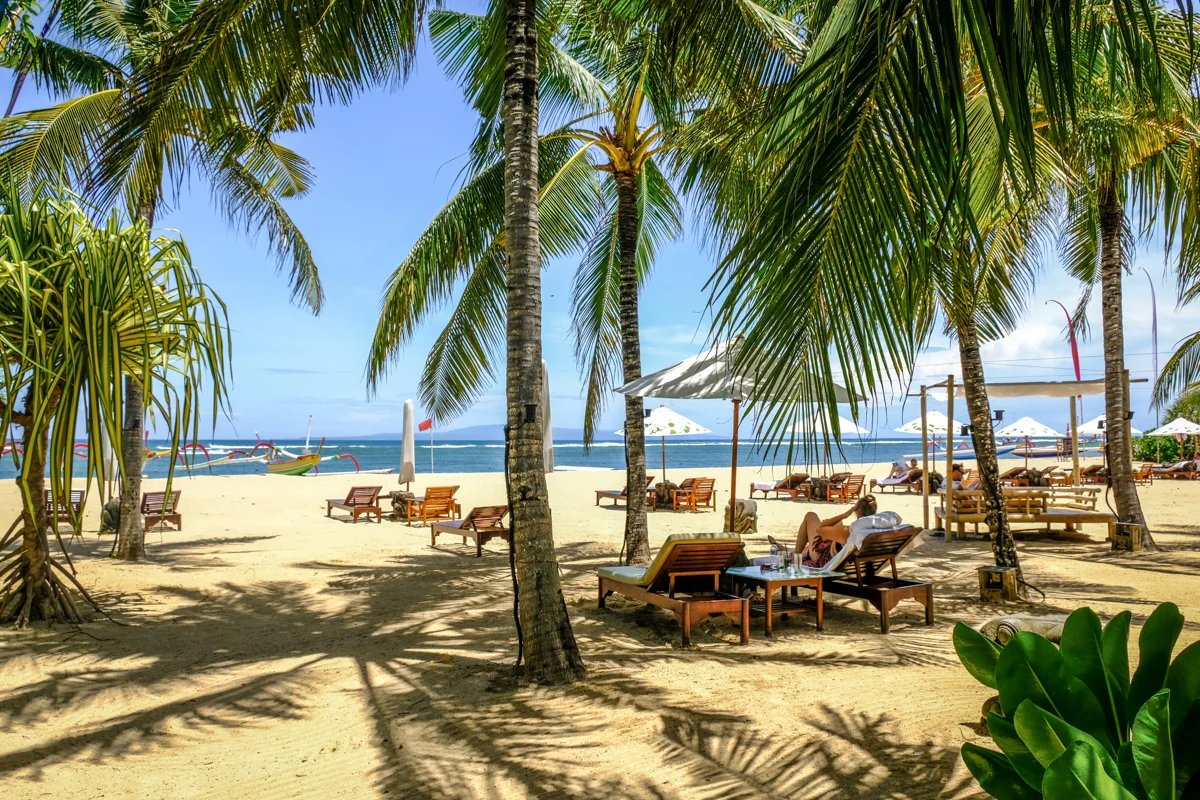
Sanur has a reputation as where people go to retire, which is unfair and also why it is cheap. What it actually offers: the calmest swimmable water in south Bali, a genuinely walkable beachfront boardwalk, the lowest rent on this list, a gentle east-coast surf that works in wet season when Canggu is blown out, and almost no traffic.
What it is bad at: community. The nomad density is low, the nightlife is essentially nonexistent, and if you are 26 and want to meet fifty people this is the wrong choice. It faces east, so the event is sunrise, not sunset.
Where it wins outright: November to March. When westerlies blow out the west coast, Sanur, Keramas and Nusa Dua are offshore and empty. Almost no visitors know this.
Season matters more than area
- April–October (dry): west coast season. Canggu, Pererenan and the Bukit at their best. Also peak prices in July–August.
- November–March (wet): westerlies blow the west out on many days, rain comes in short heavy afternoon bursts, and rents soften noticeably. The east coast — Sanur, Keramas, Nusa Dua — fires.
If you have flexibility, the shoulder months of April, May, September and October are the answer: dry-season conditions, high-season prices not yet applied.
How to actually pick, in one week
- Book 5–7 nights only. Anywhere central in Canggu.
- Rent a scooter on day one. Daily rate is fine for a week.
- Ride all five areas during that week. Work a morning in each. Ubud and Uluwatu are each a day trip, not a guess.
- Then sign a month, negotiated in person, with the monthly rate — which is typically 40–60% below the nightly rate multiplied out.
- Check the electricity arrangement before you sign. Aircon in a badly insulated villa can add 1.5–2.5M IDR a month.
Almost everyone who books a month from abroad either overpays or ends up somewhere they would not have chosen. One week of flexibility is the cheapest insurance available.
Where the money leaks, whichever area you pick
The thing that determines your monthly total is not the area — it is whether you pay the tourist rate or the resident rate for the things you buy every week. And in Bali, the resident rate is almost never advertised.
Scooters, gyms, yoga studios, coworking spaces and villas all price monthly and weekly rates 30–50% below the daily or drop-in rate, available only if you ask. Massage slots in the empty 1–4pm window run 30–50% below the 6pm price for an identical treatment. Bars run 2-for-1 windows from around 4pm to 7pm. Hotel pool day passes undercut beach club minimum spends by half for the same swim.
That is exactly what Last Call Bali tracks: a live directory of what venues in Canggu, Pererenan, Ubud, Seminyak, Uluwatu and Sanur are discounting right now, with a direct WhatsApp line to the venue. No commission, no booking fee, no card details, and the venue keeps 100% of what you spend.
See what's discounted in your area today →
Book a week, ride everywhere, then commit. And ask for the monthly rate at every single counter.