Short answer: if you came to Bali to swim, you are on the wrong coast. Canggu, Kuta, Seminyak and Uluwatu are surf coast — dark volcanic sand, steep shore dump, real rip currents. The swimming is on the east, behind offshore reef: Nusa Dua, Sanur, Amed, and a handful of protected bays.
This surprises people who booked a Canggu villa expecting a swimming holiday. It is the single most common mismatch between what Bali is sold as and what it is.
Last checked: 12 August 2026. Prices in Indonesian rupiah. Water is 27–29°C year-round.
The comparison
| Beach | Water | Sand | Crowd | Best tide | Best for |
|---|---|---|---|---|---|
| Nusa Dua | Very calm, reef lagoon | Soft white | Medium | Mid–high | The best swimming on mainland Bali |
| Sanur | Calm, shallow, reef-protected | Golden | Medium | High | Sunrise swims, families, paddleboarding |
| Amed (Jemeluk / Lipah) | Calm, exceptional clarity | Volcanic pebble / grey sand | Low | Mid–high | Snorkelling and diving |
| Jimbaran Bay | Gentle, gradual entry | Golden | Medium | Any | Easy swim plus seafood dinner |
| Bias Tugel (near Padang Bai) | Clear, calm on good days | Golden, small cove | Low | Mid | Clear water without the crowd |
| Melasti (Bukit) | Clear turquoise | White | Medium–high | Mid–high | The one good west-side swim |
Why the east is different: offshore reefs block the Indian Ocean swell, so the water inside them settles and clears. The west faces open swell, and in wet season the river mouths push debris onto the sand after storms.
Nusa Dua — the calmest water on mainland Bali
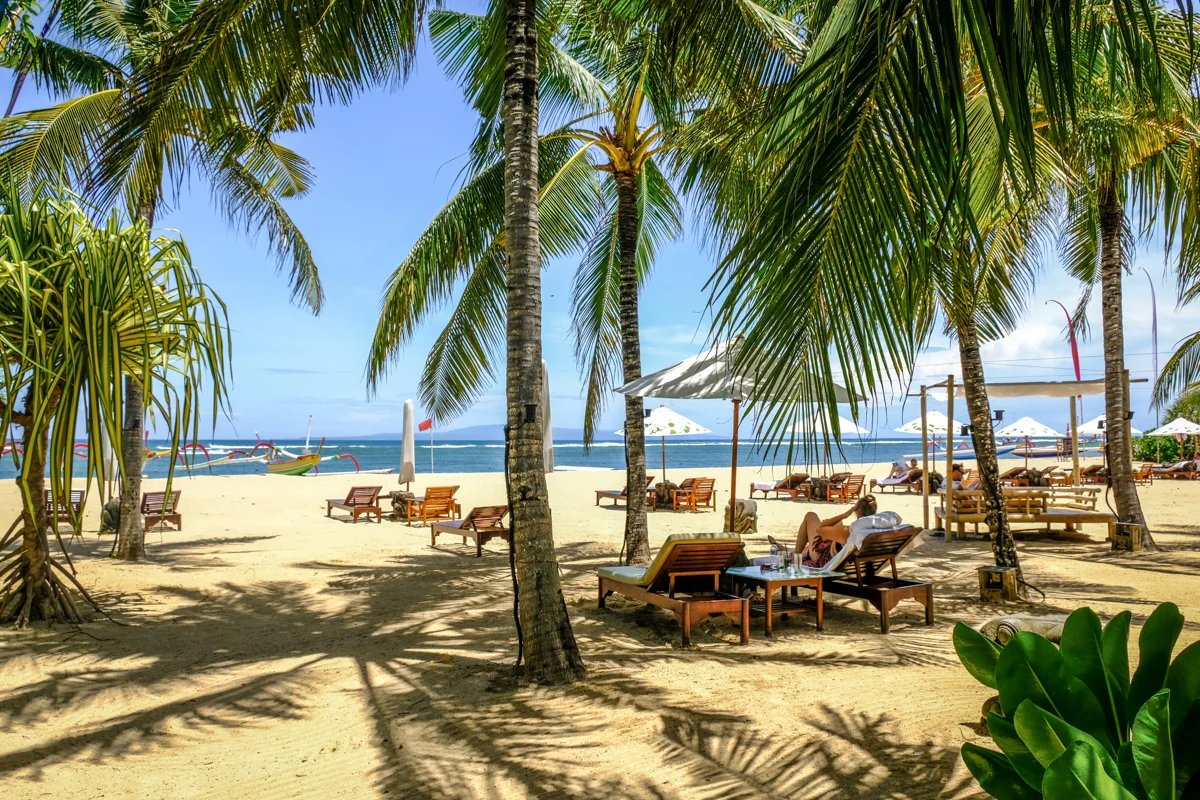
A reef sits offshore and turns the whole coastline into a lagoon. Soft white sand, gradual entry, lifeguards along the resort-front sections, and water clear enough to see your feet.
Beaches: Nusa Dua Beach, Geger and Mengiat are all excellent. Geger is the one with the least resort feel.
The honest note: Nusa Dua is a purpose-built resort enclave. It is clean, manicured, quiet and slightly sterile — nothing about it feels like the rest of Bali. That is exactly why the swimming is good and exactly why some people dislike it.
Getting there: 25–45 minutes from the airport, 50–70 from Canggu.
Sanur — best at high tide, best at sunrise
Seven kilometres of reef-protected shoreline with a paved path running the length of it. Shallow, calm, safe for children, and the best sunrise in Bali because it faces east.
The tide caveat is important. At low tide the water recedes a long way, leaving shallow pools and exposed reef. At high tide it is a proper swim. Check a tide app before you commit to the ride.
Sanur is also the cheapest good base in south Bali if you are staying — see the Sanur area guide.
Amed — the clearest water and the best snorkelling
Northeast coast, 2.5–3 hours from Ubud or the south. Black volcanic pebbles and sand rather than white beach, Mount Agung behind you, and the best underwater visibility in Bali.
Jemeluk Bay is the hub. Two distinct zones:
- Right side facing the ocean — the underwater statues and postbox, sitting at roughly 3–5 metres about 20–30 metres out, marked by a buoy. Shallow, calm, easy shore entry.
- Left side toward the cliffs — the wall, dropping from about 5 metres to nearly 40. Bigger fish, better for confident swimmers and divers.
Lipah Beach, nearby, is the easier one: fine grey sand, walk-in entry, natural coral gardens and turtles, quieter.
| Amed practicalities | |
|---|---|
| Entry fee | None at Jemeluk |
| Mask and snorkel rental | 50,000–100,000 IDR |
| Local jukung boat to the drop-off | 150,000–200,000 IDR |
| Sunbeds | Usually free with food or drink at Jemeluk; ~50,000 at Lipah |
| Best hours | 7–10am, clearest and calmest |
| Best season | April–October |
Bring reef shoes. Jemeluk is grapefruit-sized volcanic stones and the entry is genuinely awkward barefoot.
Jimbaran Bay
Gentle waves, gradual sandy seabed, and the practical advantage of being 25 minutes from the airport. The classic use is a late afternoon swim followed by seafood on the sand — agree the price per kilo before they cook it.
Bias Tugel
A small cove near Padang Bai on the east coast, backed by cliffs. Clear turquoise water on calm days, very few people, and good snorkelling. A short walk down from the road. No facilities to speak of, which is the point.
Melasti — the west coast exception
On the Bukit, and the only genuinely good swimming beach on the west side. Clear turquoise water, white sand, and — unusually for the peninsula — a paved road all the way down, so no staircase.
Check the tide. At low tide several Bukit beaches become exposed reef flats rather than swimming water. Melasti is better than most but still tide-dependent. See things to do in Uluwatu.
Where not to swim, and why
| Beach | Problem |
|---|---|
| Canggu, Echo, Berawa | Dark sand, steep shore dump, rips. Surf coast. |
| Kuta / Legian | Swimmable with care — lifeguards and flags — but real rips |
| Uluwatu, Bingin, Padang Padang | Reef breaks with strong current; surf spots first |
| Any beach after heavy rain, west coast | River-mouth runoff and debris; give it 24 hours |
Rip currents, the short version: a rip is a channel of water flowing back out to sea, often looking calmer and darker than the water either side. If you are caught, do not swim straight for the beach — go parallel to the shore until the pull weakens, then come in. Stay with anything that floats. Raise one arm if you need help.
Timing and practicalities
- Mornings, 7–10am. Calmest water, best visibility, least wind, coolest sand.
- Mid to high tide almost everywhere on this list.
- Dry season (April–October) for visibility; wet season means runoff and reduced clarity, especially on the west.
- Sunset is 6:00–6:30pm year-round, so an afternoon swim ends earlier than you think.
- The sun is brutal eight degrees off the equator — rash guard and zinc, not just sunscreen.
Good for / skip if
Make the trip if: swimming, snorkelling or clear water is genuinely part of why you came. Amed is worth two nights, not a day trip.
Skip it if: you are here to surf and work. In that case the pool is your swimming — see day passes in Canggu, where a hotel pool pass at 150,000–350,000 IDR beats a beach club minimum spend for the same swim.
The honest negatives
- Distance. Amed is 2.5–3 hours from the nomad areas. Nusa Dua is 50–70 minutes from Canggu.
- Nusa Dua feels like a resort compound, because it is one.
- Sanur's low tide genuinely ruins a badly timed trip.
- Amed's pebbles hurt without shoes, and there is limited or no lifeguard cover on the quieter east-coast beaches.
- Jellyfish appear seasonally on the east coast. Ask locally.
- Boat traffic at Amed and Sanur — snorkel inside the marked areas.
Where the money leaks
The swimming itself is free. What costs money is everything around it — and the usual Bali pattern applies: resort day passes at 200,000–600,000 IDR beat beach club minimum spends for pool access, sunbeds are frequently free with a food order rather than rented, snorkel gear is 50,000–100,000 from a warung against several times that from a tour desk, and boat trips are negotiable directly with the jukung owners on the beach.
Last Call Bali tracks what venues across Sanur, Nusa Dua, the Bukit, Canggu and Ubud are discounting right now — day passes, spa slots, food and drink offers — with a direct WhatsApp line to the venue. No commission, no booking fee, no card details.
See what's discounted near you today →
Related
- Sanur area guide — the cheapest good base on the swimming coast
- Things to do in Uluwatu — Melasti and the Bukit beaches
- Learning to surf in Bali — rips and ocean safety in detail
- Best time to visit Bali
- Bali day passes explained
How this page is verified
Conditions, tides and entry fees come from visiting these beaches and cross-checking with local operators and current residents, re-verified quarterly. Rental and boat prices are checked directly with beachfront warungs rather than tour desks, which quote considerably higher. Tide dependence is stated per beach because it is the single factor that most often ruins a swimming trip here, and no article can tell you today's tide — check an app.