Short answer: you can eat three good meals a day in Canggu for under 150,000 IDR, or spend that on one brunch. A warung plate is 30,000–60,000 IDR; a café main is 90,000–200,000. Over a month that single choice is the difference between 3 million and 9 million IDR — roughly $360 versus $545 in food alone.
Nobody has to eat exclusively at one end. But most people drift entirely into the expensive one without deciding to, because that is what is visible from the main road.
Last checked: 12 August 2026. Prices in Indonesian rupiah.
What things cost, by tier
| Meal | Warung | Nomad café | Restaurant / beachfront |
|---|---|---|---|
| Breakfast | 20,000–35,000 | 70,000–120,000 | 120,000–200,000 |
| Lunch | 30,000–50,000 | 90,000–150,000 | 150,000–300,000 |
| Dinner | 35,000–60,000 | 100,000–180,000 | 200,000–600,000 |
| Coffee | 15,000–25,000 | 35,000–60,000 | 50,000–80,000 |
| Fresh juice | 15,000–30,000 | 40,000–70,000 | 60,000–100,000 |
| Large local beer | 25,000–45,000 | 50,000–80,000 | 80,000–150,000 |
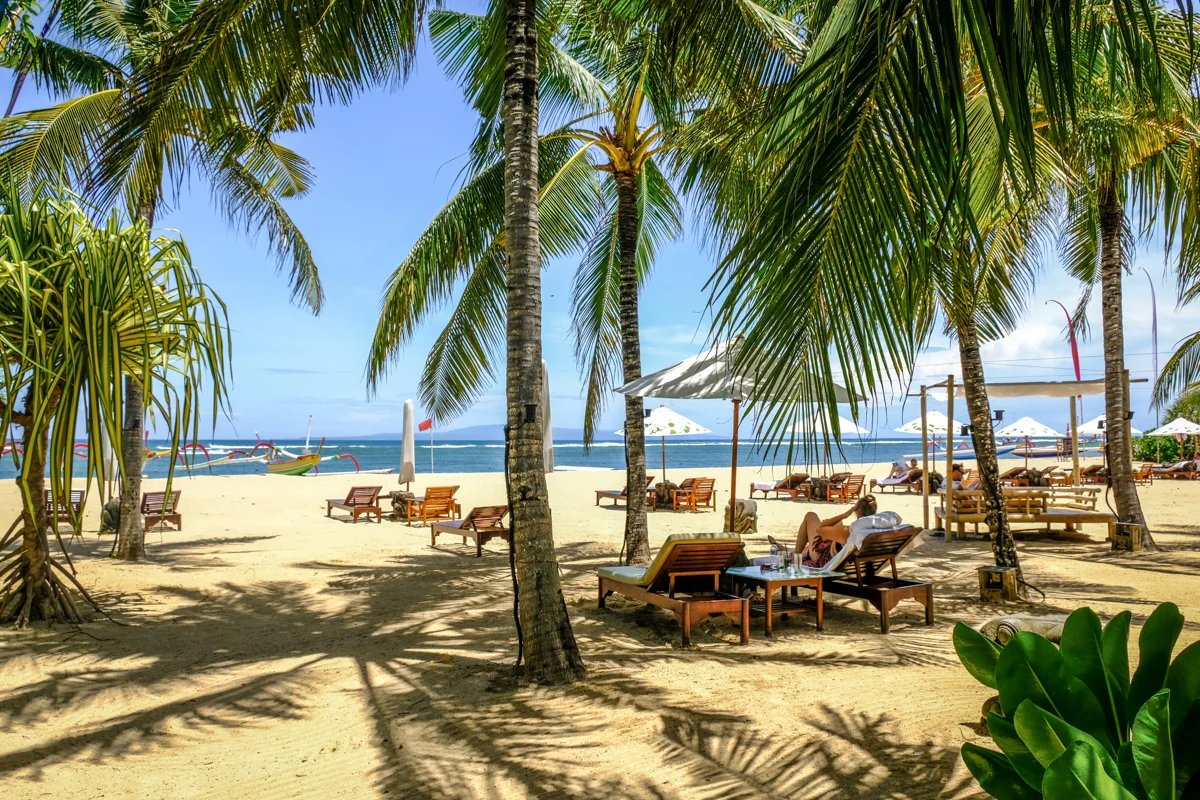
The rule that explains most of it: anything with a beach view costs roughly double the identical dish 300 metres inland.
What to order at a warung
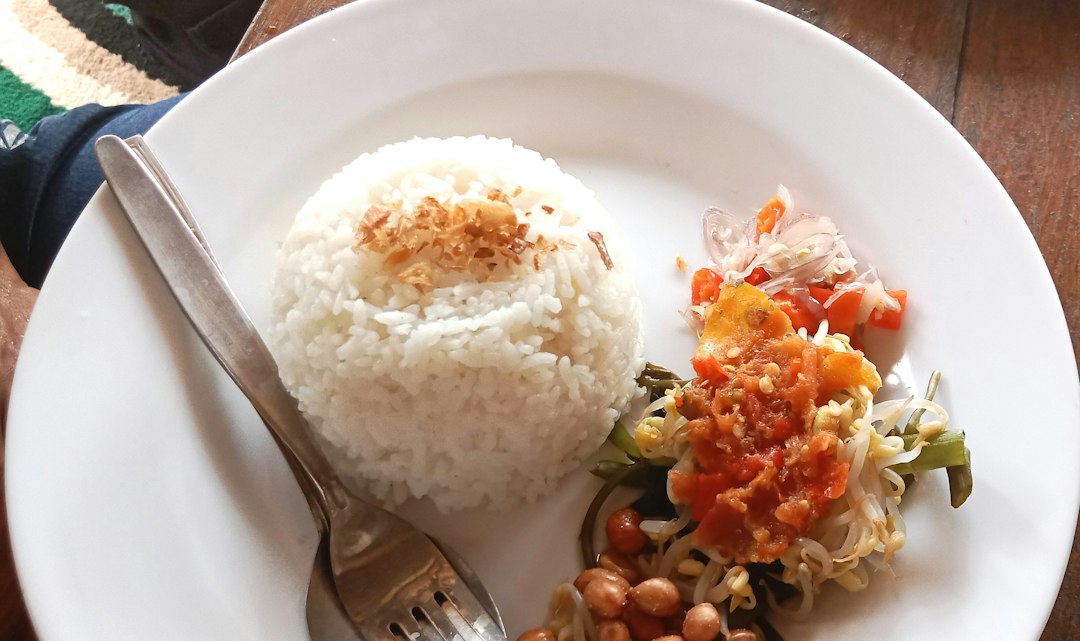
If you do not know the vocabulary you will default to nasi goreng forever, which is the Bali equivalent of eating only pizza in Italy.
| Dish | What it is | Price |
|---|---|---|
| Nasi campur | Mixed rice — rice plus several small portions you point at | 30,000–50,000 |
| Nasi goreng | Fried rice, usually with egg | 25,000–45,000 |
| Mie goreng | Fried noodles | 25,000–45,000 |
| Ayam betutu | Slow-cooked spiced chicken, Balinese | 40,000–70,000 |
| Babi guling | Balinese roast pork with crackling | 45,000–80,000 |
| Sate ayam / babi | Skewers with peanut or sweet soy | 25,000–50,000 |
| Gado-gado | Vegetables, egg, tofu, peanut sauce | 25,000–40,000 |
| Soto ayam | Turmeric chicken soup | 25,000–40,000 |
| Pisang goreng | Fried banana, the default snack | 10,000–20,000 |
| Es teh / kopi tubruk | Iced tea / local coffee | 5,000–15,000 |
On spice: sambal is served on the side and varies from mild to genuinely severe. "Tidak pedas" means not spicy; "sedikit pedas" means a little spicy. Both are understood everywhere.
How to spot a good warung
Four signals, in order of reliability:
- Indonesian customers. The single best indicator. A warung full of locals at 1pm is a good warung.
- Small menu, or none. The best ones cook five things and sell out.
- Visible turnover at lunch. Food that moves is food that is fresh. This matters more than how clean the tiles look.
- Off the main road. Fifty metres down a lane is a different price and usually better food.
An empty warung on the Batu Bolong strip at 1pm is empty for a reason.
The night markets and stalls
Pasar senggol — evening street stalls — are the cheapest good eating in Bali:
- Satay, 25,000–40,000 IDR
- Martabak (sweet or savoury stuffed pancake), 40,000–80,000 for a large one that feeds two
- Grilled corn, 10,000–15,000
- Fried snacks, 5,000–15,000 each
On safety: busy stalls with high turnover, food cooked to order or obviously fresh, and nothing lukewarm that has been sitting out. Turnover is the whole thing.
The delivery maths nobody does
Gojek and Grab food delivery is convenient and quietly expensive at the low end.
| Order | Restaurant price | Delivered, all-in |
|---|---|---|
| Warung plate | 35,000 | 55,000–70,000 |
| Café main | 130,000 | 160,000–190,000 |
| Two café mains | 260,000 | 300,000–340,000 |
The proportional markup falls as the order grows. Delivery on a 35,000 IDR warung plate can add 60–100%; on a 260,000 order it is 15–30%. So: ride out for cheap food, deliver the expensive food. Most people do exactly the opposite.
Groceries and cooking
Local produce is genuinely cheap; imported anything is 2–3× European prices.
| Item | Price |
|---|---|
| Local fruit & veg, weekly at a pasar | 150,000–300,000 IDR |
| Eggs, 10 | 25,000–35,000 |
| Local rice, 5kg | 70,000–120,000 |
| Chicken, 1kg | 45,000–70,000 |
| Imported cheese, small | 90,000–200,000 |
| Imported cereal | 90,000–180,000 |
| Wine, ordinary bottle | 350,000–600,000 |
The honest caveat: most Canggu villa kitchens are a hotplate, a kettle and a fridge. Cooking properly here is harder than it sounds, which is a large part of why everyone eats out.
A realistic weekly food budget
| Pattern | Weekly IDR | Monthly IDR |
|---|---|---|
| Warungs only | 600,000–900,000 | 2,600,000–3,900,000 |
| Mixed — warung lunches, café dinners | 1,100,000–1,700,000 | 4,700,000–7,300,000 |
| Cafés and restaurants | 1,700,000–2,300,000 | 7,300,000–9,900,000 |
The practical middle: breakfast and lunch cheap, dinner wherever you want. That alone saves 3–4 million IDR a month with no meaningful loss of quality of life.
Good for / skip if
Eat mostly at warungs if: you are here more than a month, you are on a budget, or you actually want to eat Indonesian food rather than an international menu.
Do not force it if: you have dietary requirements that warungs handle poorly, you need a laptop-friendly table, or you are here for two weeks and the 200,000 IDR difference over the trip is not the point.
The honest negatives
- Warung food is repetitive if you eat it three times a day for a month.
- Vegan and gluten-free are much better served at the café tier. Warungs use shrimp paste and fish sauce widely, including in dishes that look vegetarian — ask.
- Hygiene varies. Turnover is your filter, and most people have one bad week early on regardless.
- Hours. Many warungs sell out by 2pm and close early. The famous ones sell out earlier.
- No English menu at the best ones. That is a feature, and Google Translate's camera handles it.
Where the money leaks
Food is the second-biggest line in a Bali month after rent, and the leak is not any single meal — it is defaulting to the visible tier. But the same unadvertised-discount pattern runs through eating out here too: early-dinner sets at 5–6:30pm, food promotions on quiet weeknights, 2-for-1 windows from around 4pm to 7pm that end before most people sit down, and lunch specials that exist only on a chalkboard.
Last Call Bali tracks what Canggu venues are discounting right now — food promotions, happy hours, 2-for-1 offers, day passes — with a direct WhatsApp line to the venue. No commission, no booking fee, no card details, and the venue keeps 100% of what you spend.
See what's discounted in Canggu today →
Related
- Cost of living in Bali — three monthly budgets
- Happy hour in Canggu
- Things to do in Canggu
- Best cafés to work from in Canggu
- Monthly rent in Bali by area
How this page is verified
Price bands come from eating at these tiers weekly and cross-checking against what current residents report, re-checked monthly. We deliberately avoid publishing a fixed list of named warungs: the good ones sell out, change hands and get discovered, and a stale list of names is worse than a method for finding them yourself. What holds true is the price structure, the dish vocabulary and the signals that identify a good place — so that is what this page carries.