Short answer: you need a sarong (kamen) covering your legs, a sash (selendang) around the waist, and a top covering your shoulders and upper arms — men and women both. Temples rent or include both at the official entrance for 10,000–20,000 IDR.
The dress code is the part everyone knows. The rules that matter more are below, and one of them is a genuine religious restriction that most guides skip entirely.
Last checked: 13 August 2026. Prices in Indonesian rupiah. Balinese Hindu temples are active places of worship, not attractions with a ticket.
What to wear
| Item | Who | Where to get it |
|---|---|---|
| Kamen (sarong, covers legs) | Everyone | Rented or included at the official entrance |
| Selendang (sash at the waist) | Everyone | Same |
| Top covering shoulders and upper arms | Everyone | Bring it |
| Shoes | Removed at some inner areas | Follow what locals do |
Bring your own sarong if you are here a while — 80,000–200,000 IDR at a market, and it doubles as a beach towel and a shoulder cover. It saves the rental queue and the inflated-fee problem at some gates.
The six rules that matter more than the dress code
1. Do not enter while menstruating. Balinese Hinduism treats blood as ritually impure, and menstruating women are asked not to enter temple grounds. Signs at most entrances state this plainly. Nobody checks and nobody will confront you, which is exactly why it is worth knowing it is a genuine religious rule rather than a formality.
The same applies to anyone with an open, bleeding wound, and to people who have had a recent death in the immediate family (a period of ritual impurity called cuntaka).
2. Never stand higher than a priest, a shrine or an offering. This is the most commonly broken rule, usually by someone climbing on a wall or a plinth to get a photograph. If a priest is seated, do not tower over them; crouch or sit.
3. Do not walk in front of someone praying. Go behind them. In a busy temple this means occasionally waiting, which is the point.
4. Do not use your left hand to give, receive or point. That hand has a different job in Indonesian culture. Give and take with your right, or both.
5. Do not point with your index finger. Use an open hand or your thumb. Pointing at people or shrines reads as rude.
6. Do not sit on or climb the walls, gates or shrine platforms. They are not architecture, they are functional religious structures.
Photography
Generally fine in the outer courtyards. What is not:
- Photographing people praying without asking. Ask, or do not take it.
- Standing above a priest, an offering or a shrine to frame a shot.
- Ignoring no-photography signs at inner shrines, which are common at the innermost courtyard (jeroan) of many temples.
- Drones over temple grounds — widely unwelcome and increasingly restricted.
- Ceremony photography without checking. During an actual ceremony, put the phone away unless invited.
The Instagram-shot culture around Bali's temples has produced real friction with local communities. The practical rule: if you would not do it in a church or a mosque at home, do not do it here.
Canang sari — the little baskets everywhere
Those small woven trays of flowers, rice and incense on doorsteps, pavements, shrines and roadside walls are canang sari — daily offerings, placed fresh most mornings.
Do not step on them, kick them, or move them. Walk around. You will see them on the ground constantly, including in places that seem inconvenient — that is normal, and stepping over rather than on is the whole ask.
If you accidentally knock one, it is not a catastrophe. Do not make a performance of apologising; just move on carefully.
Entry fees, and the gate to be careful at
| Temple | Typical entry |
|---|---|
| Uluwatu (Pura Luhur Uluwatu) | ~50,000 IDR, sarong usually included |
| Tanah Lot | ~75,000 IDR |
| Tirta Empul | ~50,000 IDR plus sarong |
| Goa Gajah | ~50,000 IDR |
| Besakih | Higher, and includes a mandatory guide |
| Pura Taman Saraswati (Ubud) | Free / donation; Kecak or Legong performance ~100,000–150,000 |
Pay at the official ticket booth and take a printed ticket. People positioned near — but not at — the real gate sometimes charge 50,000–100,000 IDR for a sarong that costs 10,000–20,000, or press for a large "donation". Look up the current fee before you go. See Bali scams and what they actually look like.
Fees are revised without notice, so treat all of these as ranges rather than quotes.
Ceremonies and processions
You will meet these constantly, especially in and around Ubud, and they are the best thing about being here.
- Pull over and wait if a procession is coming down the road. Do not ride through it, do not overtake it.
- Anyone carrying offerings has right of way, always, everywhere.
- You may be invited in. If so, accept, follow what the person next to you does, and dress as well as you can.
- Odalan (temple anniversary festivals) close temples to casual visitors sometimes and open them spectacularly at others. Ask locally.
- Full and new moon days (purnama and tilem) are busier and more ceremonial. Excellent to witness, worse for sightseeing.
Nyepi — the one that stops the island
Bali's Day of Silence, in March, moves each year with the Balinese saka calendar. For 24 hours: no flights in or out, no vehicles on the road, no going outside, no lights after dark, and many businesses closed the day before and after.
The night before is the Ogoh-ogoh parade — enormous demon effigies through the streets — and it is genuinely one of the great things to see in Southeast Asia.
Check the current year's date before booking anything in March. We deliberately do not print a date here, because it changes annually.
Good for / skip if
Visit temples if: you want to understand where you are. Bali's religious life is the reason the island feels like it does, and three temples teach you more than thirty beach clubs.
Skip a temple if: you cannot meet the dress code that day, you are in a rush, or it is a major ceremony and you would be in the way. Doing it badly is worse than not doing it.
The honest negatives
- The famous temples are crowded between roughly 10am and 3pm. Go early.
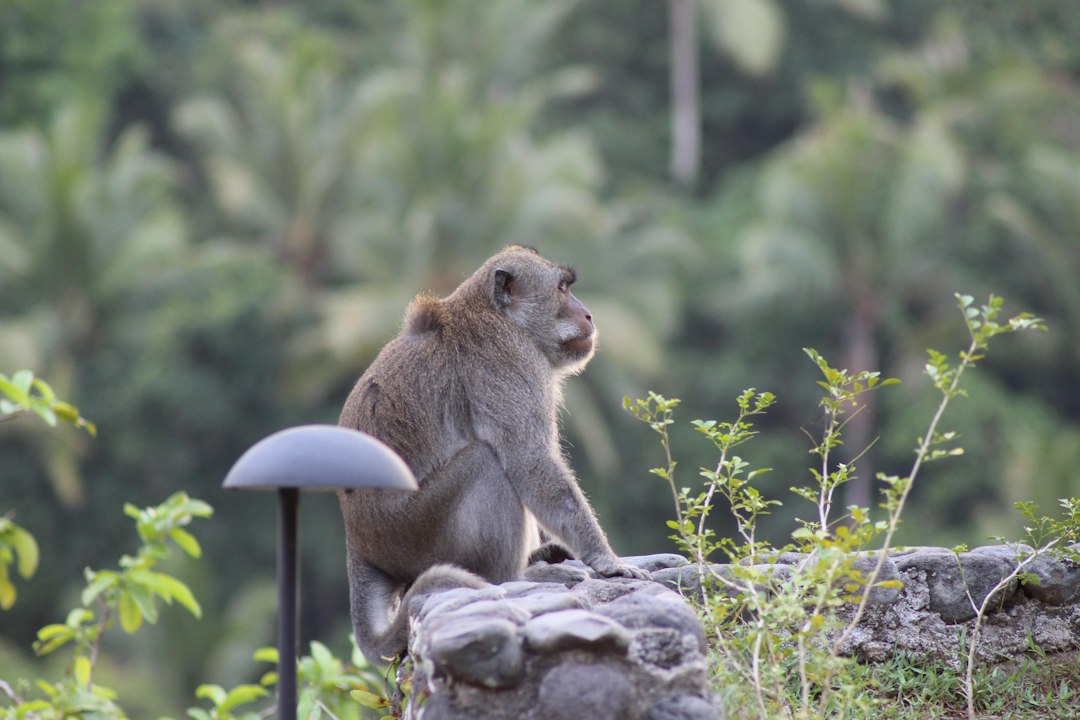
- Monkeys at Uluwatu are practised thieves — sunglasses, phones, hats. Zip everything away before you get out of the car.
- Some sites feel commercialised, with markets and photo props on the approach. The temple behind it usually is not.
- Inner courtyards are often closed to non-worshippers. That is not a slight; it is the point of an inner courtyard.
- Sarong rental queues at peak. Bring your own.
Where the money leaks
Temple entry itself is fixed and cheap. Where money goes is around it: drivers booked through a hotel carry a 30–50% markup over arranging directly, "packages" bundling entry fees are frequently worse value than paying at the gate, and paid Instagram-spot gates on the approach roads are a genre of their own.
The wider pattern applies everywhere in your week here: spa slots in the empty 1–4pm window at 30–50% off, yoga multi-class passes below drop-ins, pool day passes at a fraction of a beach club minimum spend.
Last Call Bali tracks what venues across Canggu, Pererenan, Ubud, Seminyak, Uluwatu and Sanur are discounting right now, with a direct WhatsApp line to the venue. No commission, no booking fee, no card details.
See what's discounted near you today →
Related
- Things to do in Ubud — the three temples worth your time
- Things to do in Uluwatu — the temple and Kecak timing
- Day trips from Ubud
- Bali scams and what they actually look like
- Best time to visit Bali — including Nyepi
How this page is verified
Etiquette rules here are the ones stated on temple signage and confirmed by Balinese friends and guides, cross-checked across multiple temples rather than taken from a single site's notice board. Entry fees are checked at the gates and re-verified quarterly; they are revised without notice, so treat them as ranges. Nyepi's date moves annually with the Balinese saka calendar, which is precisely why no fixed date appears above — check the current year rather than an article's.
Where a practice varies between temples and villages — and several do — this page says so rather than presenting one village's custom as an island-wide rule.