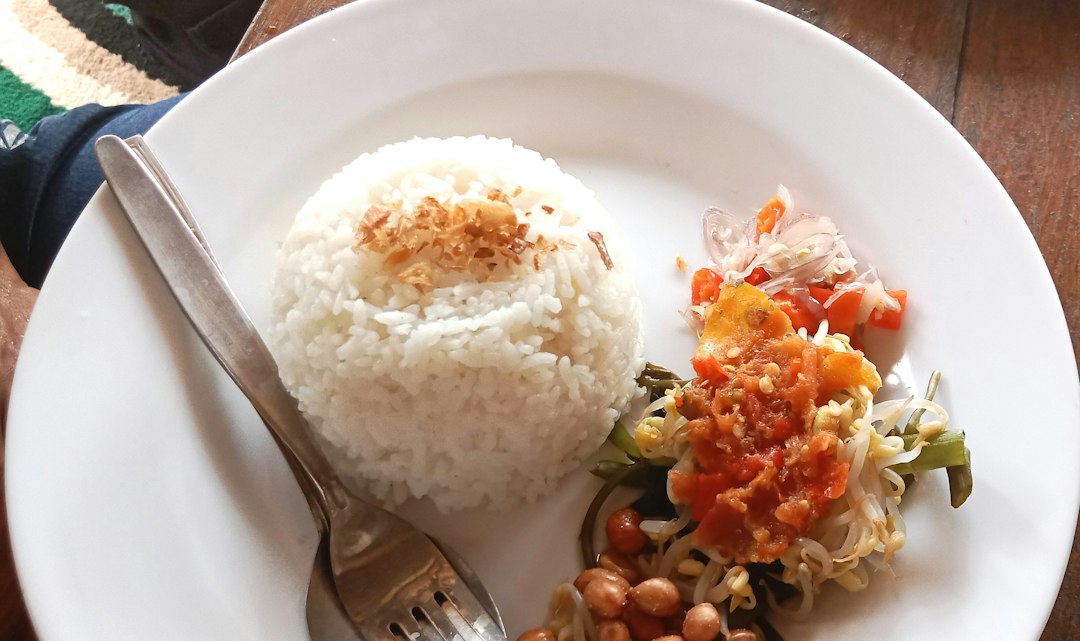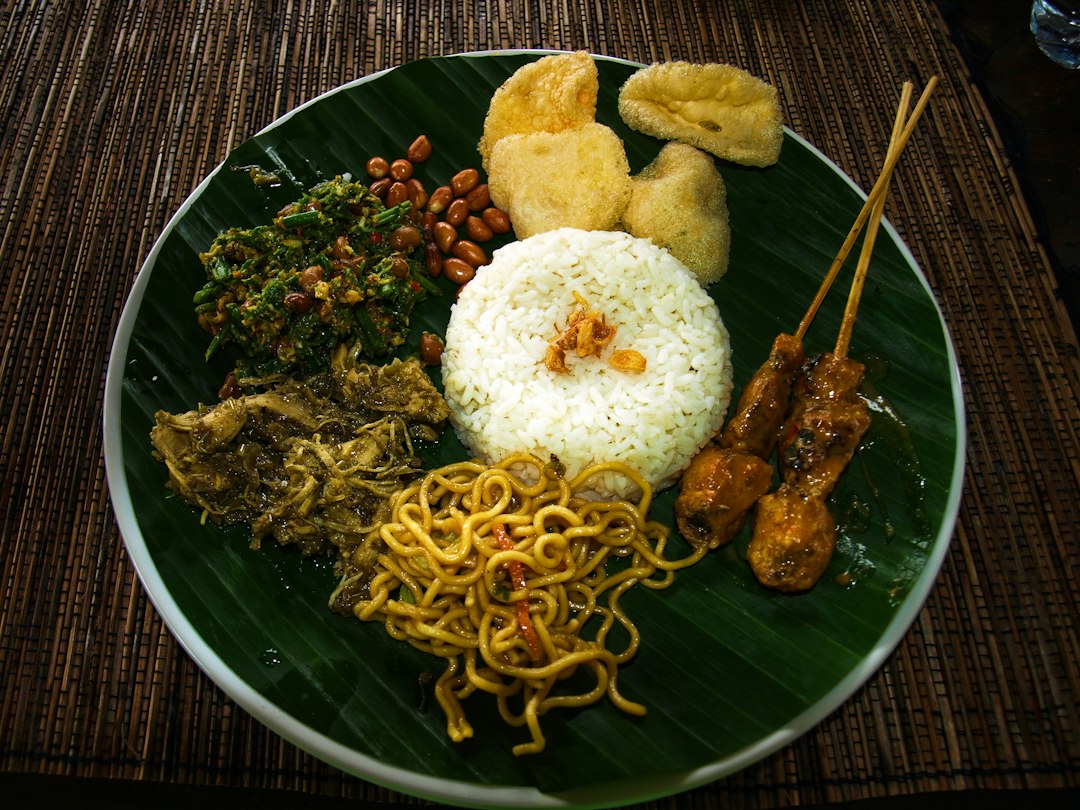
Short answer: Bali is genuinely excellent for plant-based eating, and — unusually — cheap, because tempeh and tofu are local staple proteins rather than health-food substitutes. A vegan warung plate is the same 30,000–50,000 IDR as any other.
Where it gets expensive is the tier that markets itself as plant-based: smoothie bowls, raw desserts and imported ingredients at 90,000–200,000 IDR for the same nutrition. Both exist side by side, and most visitors only ever see the second one.
The one thing that catches people out: terasi, shrimp paste, appears widely — including in dishes that look vegetarian.
Last checked: 13 August 2026. Prices in Indonesian rupiah.
What to order at a warung
| Dish | What it is | Price | Notes |
|---|---|---|---|
| Gado-gado | Vegetables, tofu, tempeh, peanut sauce | 25,000–40,000 | Ask about egg and shrimp paste |
| Pecel | Similar, sharper peanut sauce | 25,000–40,000 | |
| Urap | Vegetables with spiced grated coconut | 20,000–35,000 | Often naturally vegan |
| Tempeh goreng / bacem | Fried or sweet-braised fermented soy | 20,000–45,000 | The staple protein |
| Tahu goreng | Fried tofu | 20,000–40,000 | |
| Cap cay | Stir-fried mixed vegetables | 25,000–40,000 | Ask about oyster sauce |
| Sayur lodeh | Vegetable coconut curry | 25,000–40,000 | |
| Nasi campur | Mixed rice — point at plant dishes only | 30,000–50,000 | The most flexible option |
| Nasi goreng sayur | Vegetable fried rice | 25,000–45,000 | Ask no egg, no terasi |
| Mie goreng sayur | Vegetable fried noodles | 25,000–45,000 | |
| Perkedel | Potato fritter | 5,000–12,000 | Sometimes contains egg |
| Pisang goreng | Fried banana | 10,000–20,000 | |
| Es kelapa muda | Young coconut | 15,000–30,000 |
Nasi campur is the best system, because you point at what you want. Rice plus tempeh, tofu, urap and greens is a complete plate for around 35,000 IDR.
The terasi problem, and the phrases that fix it
Terasi (shrimp paste) is used across Indonesian cooking, including in most sambals and in vegetable dishes that appear plant-based. Fish sauce and chicken stock are the other two to watch.
| Phrase | Meaning |
|---|---|
| Tanpa terasi | Without shrimp paste |
| Tanpa telur | Without egg |
| Tanpa daging | Without meat |
| Saya vegetarian / vegan | I am vegetarian / vegan |
| Ada yang tanpa terasi? | Is there anything without shrimp paste? |
| Tanpa kaldu ayam | Without chicken stock |
These are understood everywhere, including at the smallest warung, and asking is completely normal rather than awkward. Nobody will be offended.
Two honest caveats:
- At a busy warung with pre-cooked dishes, "without terasi" sometimes means "the dish that already has none" rather than a modified version. Point and ask rather than assume.
- Cross-contamination is not managed at the warung tier. If your requirement is medical rather than ethical, the café tier handles it more reliably.
Where the expensive tier starts
Bali's wellness economy has built a genuinely good plant-based restaurant scene, and it is priced accordingly.
| Warung tier | Wellness café tier | |
|---|---|---|
| Breakfast | 20,000–35,000 | 70,000–140,000 |
| Lunch / main | 30,000–50,000 | 90,000–180,000 |
| Smoothie bowl | — | 80,000–150,000 |
| Raw dessert | — | 60,000–120,000 |
| Plant milk coffee | 20,000–30,000 (local) | 40,000–70,000 |
| Monthly, eating mostly here | ~3,000,000 IDR | 7,000,000–9,000,000 IDR |
Neither is wrong. The café tier is often excellent and the ingredients are frequently imported, which is where the cost sits. But a lot of people arrive assuming plant-based in Bali means the expensive version, and eat at 150,000 IDR a meal without knowing that 35,000 was available two streets inland.
The practical middle: warungs for breakfast and lunch, café tier when you actively want it. Saves 3–4 million IDR a month.
By area
Ubud — the best, comfortably. Deepest range at both tiers, most staff familiarity with the questions, and a large permanently plant-based community. See cheap eats in Ubud.
Canggu / Pererenan — strong at the café tier, good warung options, plant milks universally available.
Seminyak — good café tier, higher prices, fewer warung options in the immediate centre.
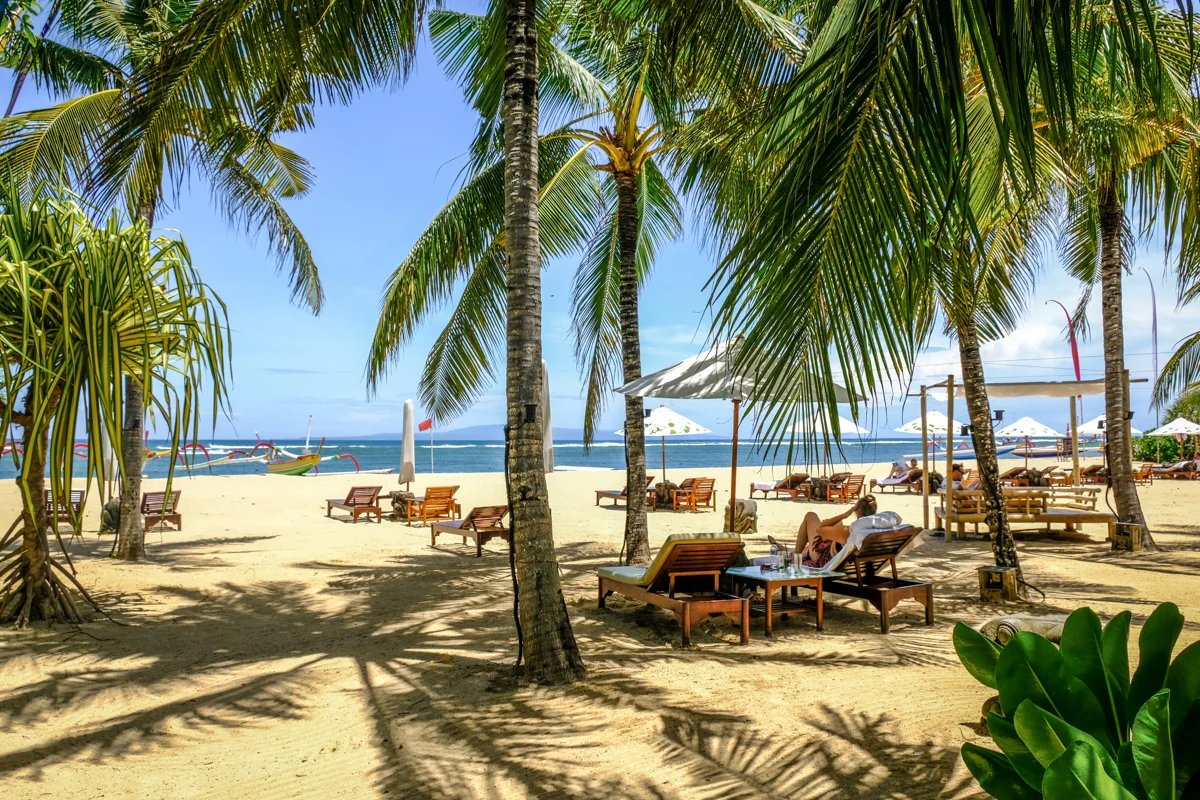
Sanur — reasonable, quieter scene, boardwalk warungs are workable with the phrases above.
Uluwatu / the Bukit — the thinnest. Warungs here lean toward nasi campur with meat and grilled fish, and the café tier is small. Ask, and expect to eat more rice and tempeh. See eating on the Bukit.
Rural areas (Sidemen, Munduk, Amed) — limited options and limited familiarity with the concept. Learn the phrases properly before going.
Groceries
Plant-based cooking here is cheap on local ingredients and expensive on imported ones.
| Item | Price |
|---|---|
| Tempeh block | 5,000–15,000 IDR |
| Tofu block | 5,000–15,000 IDR |
| Local fruit & veg, weekly | 150,000–300,000 IDR |
| Local rice, 5 kg | 70,000–120,000 IDR |
| Coconut milk / oil | Cheap, local |
| Imported nut butters | 90,000–200,000 IDR |
| Plant milks (carton) | 40,000–90,000 IDR |
| Imported vegan cheese / mock meat | 120,000–300,000 IDR |
| Nutritional yeast, protein powder | Expensive, health shops only |
Bring with you anything brand-dependent — specific supplements, protein powder, or B12 — because availability is patchy and prices are high. See groceries and shopping in Bali.
Also worth knowing: most Bali rental kitchens are a hotplate, a kettle and a fridge, with no oven. That shapes what cooking is realistic.
The honest negatives
- Cross-contamination is not managed at the warung tier.
- Hidden terasi, fish sauce and chicken stock in dishes that look safe. Ask every time, not once.
- The Bukit and rural areas are thin.
- The wellness café tier is expensive and it is easy to default into it.
- Repetition. Warung plant-based food is a fairly narrow rotation if you eat it three times a day.
- Ceremonial food at temple events and family celebrations is frequently meat-based; declining politely is fine and nobody minds, but do not expect an alternative.
- B12 and specific supplements are expensive and inconsistently stocked.
Where the money leaks
The leak in this category is specific and large: defaulting to the wellness tier because that is what is visible on the main road. The difference between eating plant-based at warungs and eating plant-based at cafés is 4–6 million IDR a month — the largest single food-spending gap in Bali.
The usual unadvertised discounts apply on top: early-dinner sets at 5–6:30pm, quiet-weeknight food promotions, and 2-for-1 windows from around 4pm to 7pm.
Last Call Bali tracks what venues across Canggu, Pererenan, Ubud, Seminyak, Uluwatu and Sanur are discounting right now, with a direct WhatsApp line to the venue. No commission, no booking fee, no card details.
See what's discounted near you today →
Related
- Bali warung guide: what to order — the full dish vocabulary
- Cheap eats in Ubud — the best area for this
- Cheap eats in Canggu · Uluwatu
- Groceries and shopping in Bali
- Yoga in Bali: prices and retreats
- Cost of living in Bali
How this page is verified
Dish descriptions, the terasi issue and price bands come from eating at both tiers across Canggu, Ubud, Sanur and the Bukit, cross-checked with Indonesian friends and with long-term plant-based residents, and re-checked monthly.
We deliberately do not name restaurants. The plant-based scene in Bali turns over quickly, we take no commission or affiliate fees in this category, and the useful part is the vocabulary and the price structure — which lets you order well anywhere, including in the areas where no article has listed a single option.
If your requirement is medical rather than ethical, treat the warung tier with appropriate caution on cross-contamination and speak to the venue directly. Nothing here is dietary or medical advice.