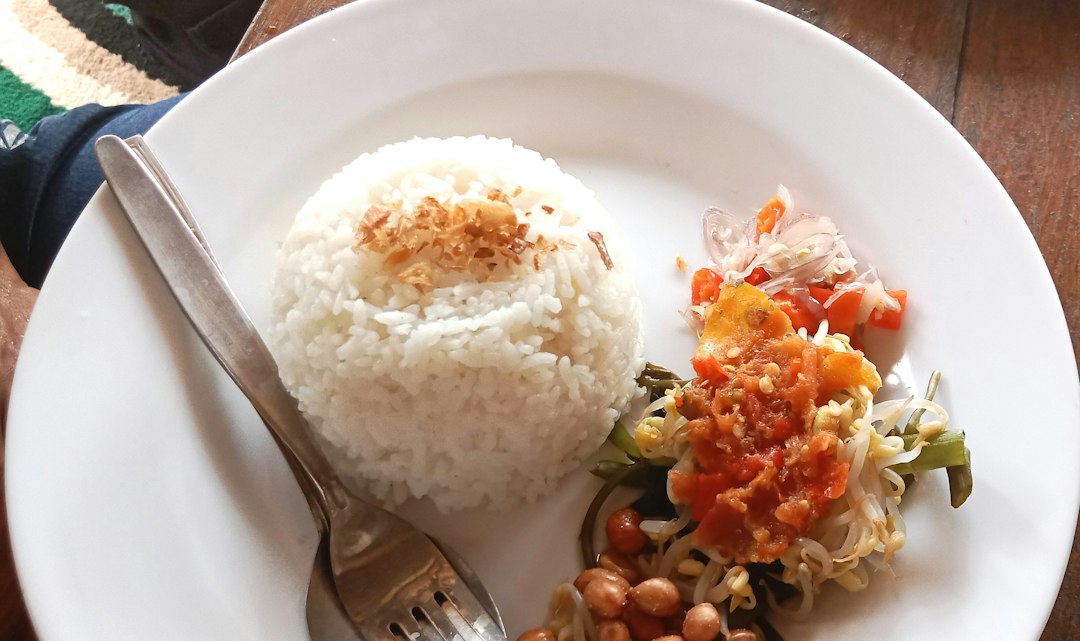
Short answer: a warung is a small family-run eatery, a full plate costs 30,000–60,000 IDR, and if you learn about ten dish names you will eat better for a month than most visitors do in a year. The default order is nasi campur — rice with several small portions you point at.
The most common mistake in Bali is ordering nasi goreng for six weeks because it is the only word you know.
Last checked: 12 August 2026. Prices in Indonesian rupiah, typical warung tier.
Rice and noodle bases
| Dish | What it is | Price |
|---|---|---|
| Nasi campur | "Mixed rice" — rice plus several small portions of meat, veg, egg, sambal | 30,000–50,000 |
| Nasi goreng | Fried rice, usually with egg on top | 25,000–45,000 |
| Mie goreng | Fried noodles | 25,000–45,000 |
| Nasi kuning | Yellow turmeric rice, often a breakfast plate | 20,000–35,000 |
| Bubur ayam | Rice porridge with chicken — the local breakfast | 20,000–30,000 |
| Kwetiau | Wide flat noodles, stir-fried | 30,000–50,000 |
Balinese dishes worth crossing town for
| Dish | What it is | Price |
|---|---|---|
| Babi guling | Balinese roast suckling pig, crackling, spiced vegetables | 45,000–80,000 |
| Bebek betutu | Duck slow-cooked in spice paste and banana leaf; order ahead at some places | 80,000–150,000 |
| Ayam betutu | The chicken version, widely available | 45,000–75,000 |
| Sate lilit | Minced fish or chicken satay wrapped on lemongrass | 30,000–60,000 |
| Lawar | Minced meat, coconut, herbs, sometimes blood; genuinely local | 25,000–50,000 |
| Nasi ayam kedewatan | Spiced chicken with rice and sambal, an Ubud-road classic | ~40,000 |
| Ikan bakar | Grilled fish, usually whole, with sambal | 60,000–120,000 |
Everyday plates
| Dish | What it is | Price |
|---|---|---|
| Gado-gado | Vegetables, egg, tofu, tempeh, peanut sauce | 25,000–40,000 |
| Pecel | Similar, sharper peanut sauce | 25,000–40,000 |
| Soto ayam | Turmeric chicken soup with noodles and egg | 25,000–40,000 |
| Bakso | Meatball soup, the national street food | 20,000–35,000 |
| Sate ayam / babi / kambing | Chicken / pork / goat skewers | 25,000–50,000 |
| Cap cay | Stir-fried mixed vegetables | 25,000–40,000 |
| Tempeh / tahu goreng | Fried fermented soy / tofu, staple protein | 20,000–45,000 |
| Perkedel | Potato fritter | 5,000–12,000 |
| Telur balado | Egg in chilli sauce | 10,000–20,000 |
Snacks, sweets and drinks
| Item | What it is | Price |
|---|---|---|
| Pisang goreng | Fried banana | 10,000–20,000 |
| Martabak manis | Thick sweet stuffed pancake, feeds two | 40,000–80,000 |
| Martabak telur | The savoury egg version | 40,000–70,000 |
| Klepon | Rice balls with palm sugar inside, coconut outside | 10,000–20,000 |
| Es teh manis | Sweet iced tea | 5,000–12,000 |
| Kopi tubruk | Local coffee, grounds settled in the glass | 8,000–15,000 |
| Es kelapa muda | Young coconut | 15,000–30,000 |
| Jus alpukat | Avocado juice, usually with chocolate | 20,000–35,000 |
The six words that change your order
| Phrase | Meaning |
|---|---|
| Tidak pedas | Not spicy |
| Sedikit pedas | A little spicy |
| Tanpa terasi | Without shrimp paste (the vegetarian's key phrase) |
| Bungkus | To take away |
| Makan di sini | Eat here |
| Berapa? | How much? |
Two more worth having: enak (delicious — say it, it lands well) and terima kasih (thank you).
On sambal: it is served on the side and ranges from mild to severe. Sambal matah, the raw Balinese shallot-and-lemongrass one, is the best thing on most tables.
How to spot a good warung
Four signals, in order of reliability:
- Indonesian customers at 1pm. The single best indicator, and it beats every review site.
- A short menu, or none at all. The best ones cook five things and sell out.
- Visible turnover. Food that moves is food that is fresh — this matters far more than how the tiles look.
- Off the main tourist road. Fifty metres down a lane is a different price and usually better food.
An empty warung on a busy strip at 1pm is empty for a reason.
How a warung actually works
- Point-and-pick (nasi campur style): you take a plate of rice and indicate which dishes you want from the display. Price varies by what you choose; three or four items lands around 35,000–50,000.
- Order from a short menu: cooked to order, takes ten minutes.
- Payment is usually cash and usually at the end. Carry small notes — nobody has change for a 100,000 at a 15,000 meal.
- No service charge or tax at the warung tier, unlike cafés and restaurants where 15–21% is commonly added.
- Tipping is not expected. Rounding up is normal and appreciated.
- Many sell out and close early — lunch by 2pm, dinner by 8 or 9 at the smaller ones.
For vegetarians and vegans
Bali is genuinely good for this, and cheaply — tempeh and tofu are staple local proteins, not health-food substitutes. A plate of rice, tempeh, vegetables and sambal is 30,000–40,000 IDR and happens to be vegan.
The one thing to watch: terasi (shrimp paste) and fish sauce appear widely, including in sambals and in dishes that look vegetarian. "Tanpa terasi" is understood everywhere. Ubud is the easiest area for this by a distance — see cheap eats in Ubud.
Good for / skip if
Eat at warungs if: you are staying more than a week, you want to eat what people here eat, or your budget matters. A month of warung food is around 3 million IDR against 7–9 million eating at cafés.
Skip them if: you have complex dietary requirements beyond plant-based, you need a laptop-friendly table with aircon, or you are here four days and the difference is not the point.
The honest negatives
- Hygiene varies, and turnover is your only real filter. Most people have one bad week early on regardless of where they eat.
- Repetitive if you eat the same three dishes daily for a month — which is exactly what this page is meant to prevent.
- Limited English at the best ones. That is a feature; a translation app's camera handles the menu.
- Early closing and selling out. The famous ones go by 11am.
- Spice level can be genuinely severe if you do not specify.
- Seating and comfort are basic — plastic chairs, fans, sometimes a road right there.
Where the money leaks
Food is the second-biggest line in a Bali month after rent, and the leak is not any single meal — it is defaulting to the visible café tier on the main road, which costs three to four times the same hunger 200 metres inland.
The unadvertised-discount pattern runs through eating out too: early-dinner sets at 5–6:30pm, quiet-weeknight food promotions, and 2-for-1 windows from around 4pm to 7pm that close before most people sit down.
Last Call Bali tracks what venues across Canggu, Pererenan, Ubud, Seminyak, Uluwatu and Sanur are discounting right now — food promotions, happy hours, day passes, spa slots — with a direct WhatsApp line to the venue. No commission, no booking fee, no card details.
See what's discounted near you today →
Related
- Cheap eats in Canggu · Ubud · Uluwatu
- Bali on a budget
- Cost of living in Bali
- Things to do in Ubud — cooking classes
- Healthcare in Bali for nomads
How this page is verified
Dish descriptions and price bands come from eating at this tier across Canggu, Ubud, Sanur and the Bukit and cross-checking with Indonesian friends and current residents, re-checked monthly. Prices are warung-tier and will be higher at cafés and tourist-facing restaurants serving the same dish. We deliberately do not name specific warungs: the good ones sell out, change hands and get discovered, and a stale list of names is worse than the method for finding one yourself.